
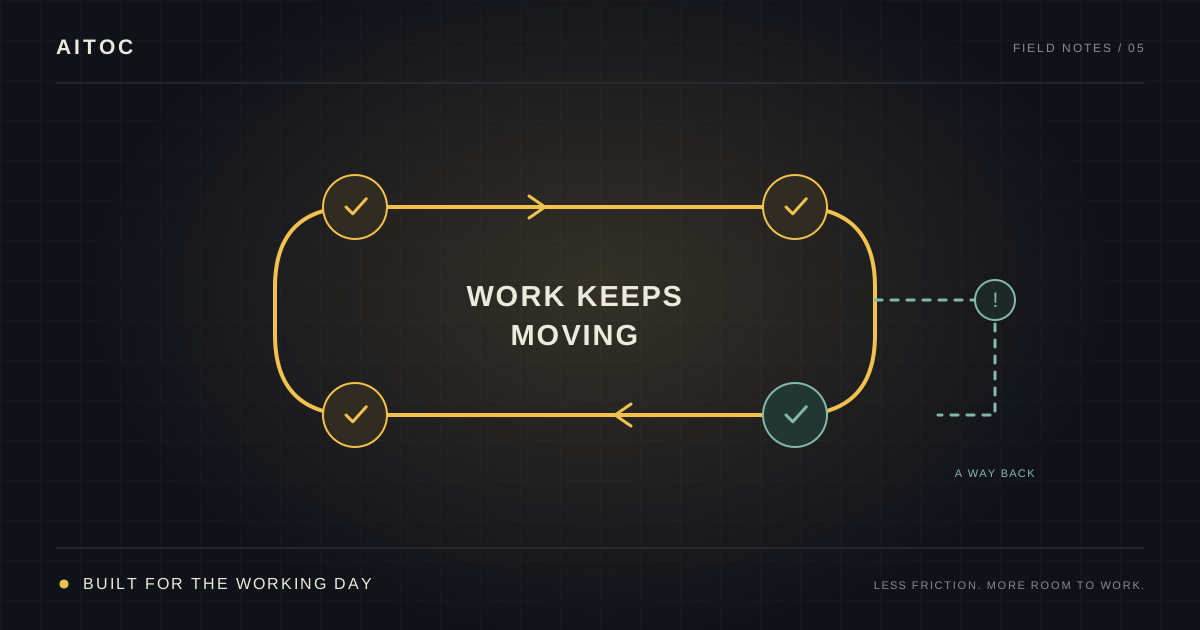
 AFTER LAUNCH
Why Working Automations Still Fail After Launch
An automation earns its place when it makes daily work easier, shows what needs attention, and gives the team a clear next step when something does not go to plan.
↗ Insights
AITOC INSIGHTS
Practical guidance for operators deciding what to fix, what to automate, and what evidence should exist before a build begins.
Practical answers to the questions that come up when you want less repetitive work and a team that can get on with the day.
An automation earns its place when it makes daily work easier, shows what needs attention, and gives the team a clear next step when something does not go to plan.
AFTER LAUNCH
An automation earns its place when it makes daily work easier, shows what needs attention, and gives the team a clear next step when something does not go to plan.
↗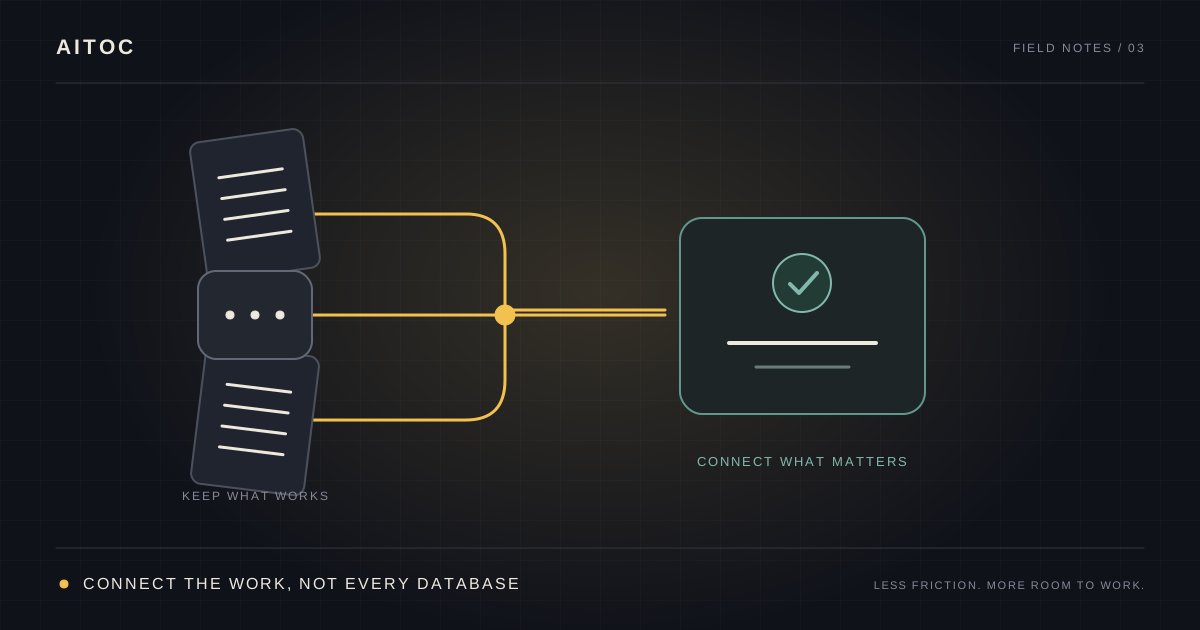 DATA READINESS
Information spread across familiar tools does not automatically need moving. Find where the work slows down, connect what matters, and change systems only when there is a reason.
↗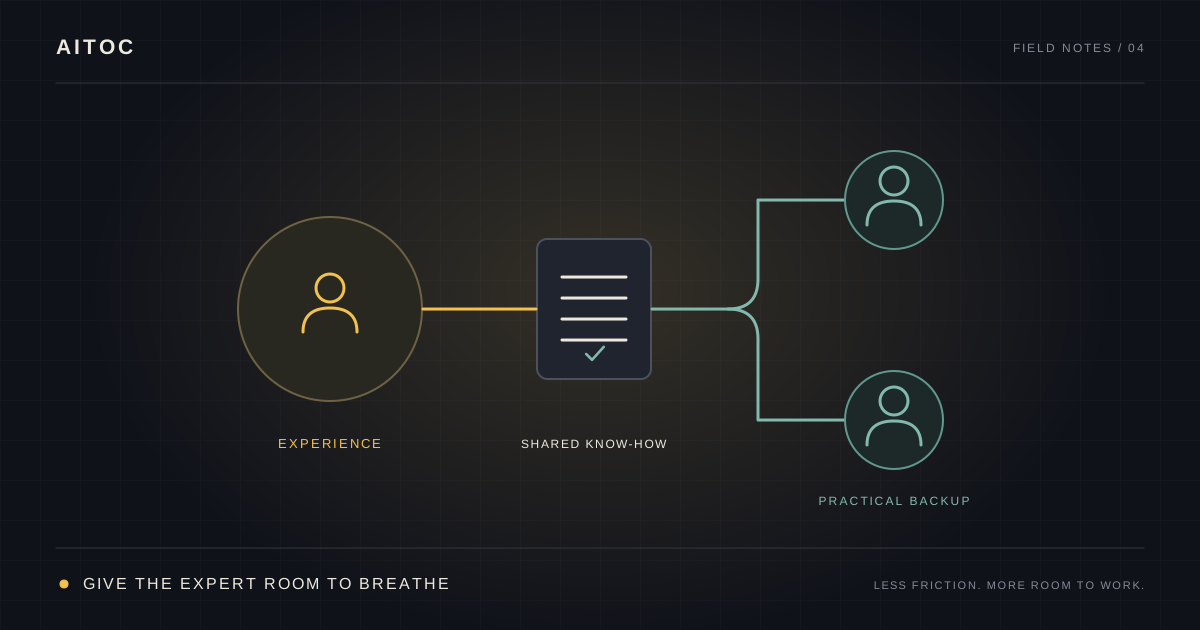 PROCESS CONTINUITY
Help the person everyone depends on by understanding their most time-consuming work, capturing the decisions that matter, and giving someone else a practical way to help.
↗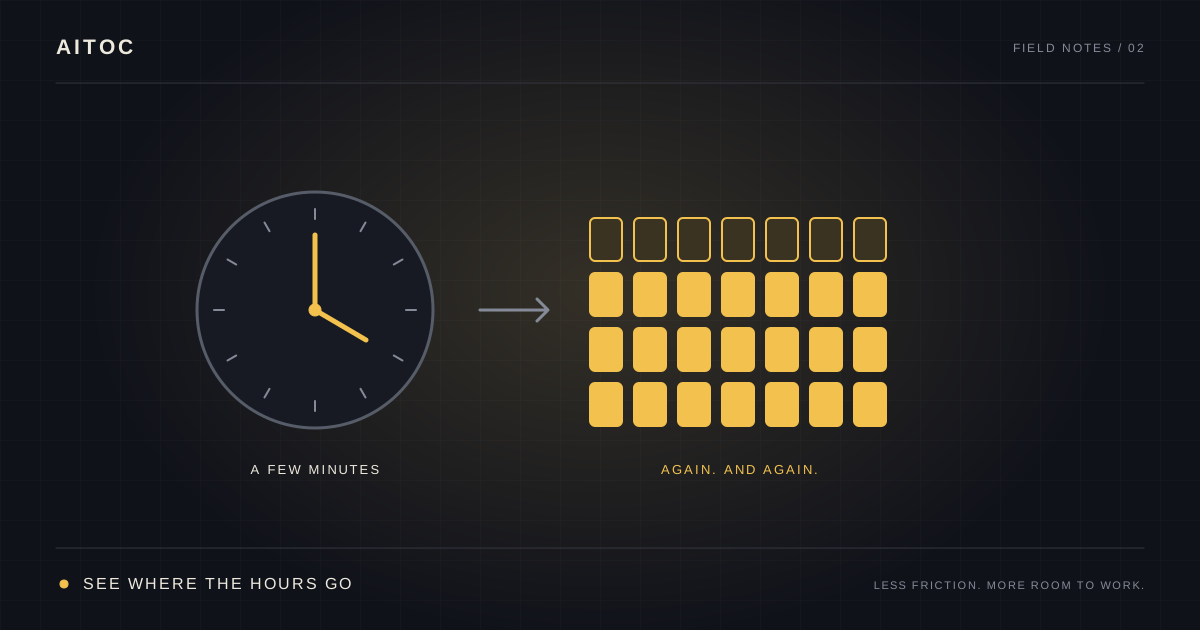 WORKFLOW COST
Measure one recurring workflow for two representative weeks, separate labor from delay and rework, and turn a vague feeling of busyness into a credible next decision.
↗ AUTOMATION PRIORITY
Choose the workflow with measurable recurring cost, stable rules, accessible evidence, and a responsible owner—not simply the task attracting the most complaints.
↗A practical guide, templates, worked example, and agent skills for turning real work into controlled instructions.
↗We will review the people, systems, repetition, and likely business impact. If a deeper assessment is not justified, we will say so.